Sunday, 30 September 2007

Gallows and Poison the Well at the Electric Ballroom, Camden – 26th September 2007

The Gallows headline tour finally hits London, and let me tell you, it’s been well worth the wait. After a summer away in the US, signing a multi-million deal with warner, relentlessly touring their album ‘Orchestra of Wolves’ in hopes of breaking the American market, it’s only appropriate to reward their adoring fan base back home with a twelve-date headline tour. They’ve brought along their newly made Floridian friends Poison the Well back with them too, at last, from a four year hiatus.


Although many of the young audience probably doesn’t remember Poison the Well, they are still received well, playing a ‘best of’ set, containing tracks from all five albums in their back catalogue. Older songs ‘Nerdy’ and ‘Slice Paper Wrists’, show they’ve passed the test of time, by clearly still being the bands most powerful songs, standing out from the more forced sound from latest offering ‘Versions’. Ending on a safe choice, with the anthem,‘Botchla’, the band get their loudest response all night, the haunting intro still works beautifully, calming the crowd down, giving them a minute to catch their breath, before bursting into the heavy, loud, dual guitar chorus that old fans still remember every word of. They’ve still got something in them, that much is visible. They’re not on the form they’ve been remembered for all this time though. Perhaps more touring is needed to tune out the squeaks. Unfortunately for Poison the Well, it seems they took their break during a critical time in hardcore music. From leading the charge of American hardcore bands in 2003, they pulled back just as they were leading the pack. The genre’s gone on to become hugely popular, as the Gallows crowd have proven, and they’ve missed the key time, inevitably meaning they have to support bands they’re far ahead of musically.


The world is your playground. Literally speaking for Gallows front man Frank Carter, who makes good use of the scaffolding supporting the lighting, by using it as a climbing frame and thus spending as little time as possible on the traditional setting of the stage.


At every Gallows show you can be sure of some excitement, and we get ours immediately during the first song when a barrage of plastic bottles get hurled from the crowd after being told to by Carter. It’s quite a spectacle, which the band takes in their stride, barely acknowledging what’s happening, whilst running frantically around each other. On ‘In a Belly of a Shark’ Carter announces he’s, ‘not too celebrity to hang with the kids’. Lucky for him then that the Gallows roadies had catered for such an occasion and packed long microphone leads into their equipment cases. Carter, of course, makes full use of it, and jumps feet first over the barrier into the sweaty pit of ecstatic fans. This is the band’s biggest headline gig to date, and in a venue where The Smiths, The Stone Roses and Blur have all played, to name a few, you really don’t expect this level of interaction.


Hardcore and rap collide during ‘Staring at the Rude Boys’, which sees the other of the night’s supporting acts, successful UK rapper, Lethal Bizzle return to the stage. It can only be compared to the Run DMC/Aerosmith collaboration on ‘Walk This Way’, with another unlikely partnership of rap and rock. It’s actually a well worked cover of The Ruts 1980 single given a unique urban, angst twist. There’s also a Black Flag cover in the hour long set to reward the audience’s older fans. Gallows tackle ‘Nervous Breakdown’, the English accent reworks the song well and you’d be forgiven for presuming it was their own. Relatives join the band on stage during ‘Orchestra of Wolves’, and after some persuading from Carter and the crowd, drummer Lee Barrett’s own father, who sticks out like a sore thumb, dressed head to toe in tweed, even gets caught up in the excitement and stage dives from the front monitors.


Although the band’s music is not as tight as it could be, it’s the way hardcore punk should be played, raw and rough, fast and fierce, with more energy than a Duracell bunny. From calling his mum live at download festival to getting tattooed between songs on stage at Reading, Gallows front man Frank Carter always seems to have something up his sleeve to ensure you leave with a grin on your face. Although the stage is Gallows’ playground, their performance, professionalism and ability are anything but childlike.


Further Listening:
www.myspace.com/gallows
'Orchestra of Wolves' out now on Black Envelope Records (2006).

Bits and Pieces

Here's some of the first work we did with Nick, we were given five completely different bands and an unusual genre to research, listen to and write a few paragraphs on.


The Replacements

The Replacements were a punk rock four piece originally hailing from Minneapolis, Minnesota. They built up a large following on the underground live scene with a reputation for always turning up drunk, smashing instruments and equipment up, and generally having as much of that punk attitude so revered, as possible. Originally being known as the Impediments, the band had to change their name, to get more shows, after another reckless performance, ruining equipment that wasn’t theirs and being black listed in their music scene. The band enjoyed relative success after their first few records and begun to pick up attention from radio stations and other more mainstream bands. This culminated in a major label signing deal in 1984 with Sire Records. Their next release ‘Tim’, was produced by Tommy Ramone, and is largely considered to be some of their best work, with better production and a larger audience, although they inevitably lost some of their more hardcore fans. The band released ‘Don’t tell a soul’ in 1987, and found some of their biggest tracks, with ‘Achin to be’ and ‘I’ll be You’ both finding their ways into the American music charts. The band seemed to fade out quite rapidly though, and weren’t getting along as well before and eventually called it a day in 1991, during a live performance in Chicago where each member just walked off stage and didn’t come back.


The Go-Betweens

The Go-Betweens, one of Australia’s biggest ever rock groups, were pioneers in the new wave movement during the late seventies. The band were centered by front duo Robert Forster and Grant McLennan, who had a clearly visible close bond and good onstage chemistry. Each writer had their own way of doing things, and this shines through in their lyrics with a clear mix of influence and style. Their first two records, ‘Very Quick on the Eye’ and ‘Send Me a Lullaby’, earned them a good fan base in their native city of Brisbane and enabled them to tour internationally. Just like Neighbours, Shane Warne and Fosters, the band quickly built up a reputation in the UK, and actually released an album on the UK independent, Postcard Records. The band went on to tour a lot during the eighties and released a few more records, who although picked up critical acclaim and excitement amongst fans, they never had a single in the music charts or a big hit. This became their infamous trait, and was usually brought up when writing about the band, and after six albums, they eventually split in December 1989.


Gram Parsons

Gram Parsons was an extremely talented American singer-song writer, who as well as being a solo artist, played in many renown bands, the biggest probably being the Byrds, although it was only briefly. He is also credited as being one of the founders of the country rock movement in the US in the early seventies. Parsons discovered music early on in his youth, and sites his original inspiration as seeing Elvis Presley when he was just 11 years old. He had a particularly turbulent childhood, and this caused him to retreat into the world of music, he dabbled in different genres, and became well skilled in guitar and piano. His first band ‘the International Submarine Band’ were a mix of key folk figures from the flourishing Boston scene. They released a few albums, both of which received good press, but Parsons moved on, feeling superiority over the band and joined the Byrds for a brief spell in the early seventies. It was at this time that Parsons became friends with the Rolling Stones, and where his level of fame became higher. Parsons was offered to tour with the band, and spent particular time with Keith Richards, both sharing a love of country music. From here, Parsons joined the band ‘The Flying Burrito Brothers’ where he had the most control and influence of the band. During all this time Parsons’ drug use began to get worryingly consistent and he died in 1973 after an apparent morphine and alcohol overdose. He has the romantic reputation of dying before his time with so much left to offer. In 2004 Rolling Stone ranked him number 87 on their ‘Greatest Artists of All Time’ list.


Albert Ayler

Albert Ayler was an avant-garde saxophonist from Cleveland Heights, Ohio. He began playing saxophone as a child and by the time he was sixteen he had already built up a reputation for his original slant on playing, by using the stiffest plastic reeds possible on his tenor saxophone, in the jazz scene of Ohio. Ayler after graduating from high school, looked for work in the jazz clubs of Los Angeles and Cleveland, but his different style of playing was not looked on well by the more traditional and influential of the jazz scene. To expand musically, and have the freedom to play, Ayler pursued his dream by moving over to Sweden, where he had much more creative control and quickly built up friendships with like-minded individuals. It was here where Ayler first begun recording and most of his music that you can buy today was recorded in Sweden or Denmark. He returned to the US in 1964, and decided to move into the iconic New York jazz scene. His album ‘Spiritual Unity’ was recorded here, famed for it’s thirty minute improvisation sessions, which earned him new respect from the Jazz leaders of the city. In 1966 he signed to Impulse Records, from insistence on John Coltrane’s part that Ayler be on his label. He got his biggest distribution, but the music never found a large enough listening audience for it’s individual twist on modern jazz. Ayler then went on, as many other musicians at the time did, on the LSD and experimentation with drugs and music. The music he made sounded more rock and roll than the traditional jazz he was playing but with elements of the R&B from his youth. Ayler was found dead in New York’s east river in November 1970, a presumed suicide. Friends later admitted to Ayler being severely depressed at the time.


Big Star

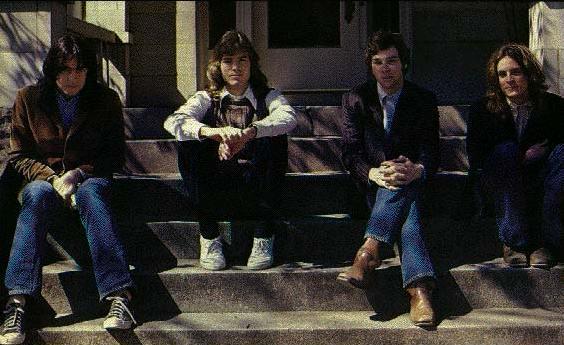
Never fully appreciated during their time, Big Star is the classic story of a band that came along at the exact wrong time and didn’t get the recognition that they so much deserved. The four piece from Memphis, Tennessee were originally named after a nearby grocery store and were fronted by duo Alex Chilton and Chris Bell, who met at the University from the same city. Despite recording three albums, all with critical acclaim, they had bad distribution through their label and as a result saw very poor sales. To put into context just how much they were under appreciated, Bell actually left the band after the first album, ‘#1 Record’, because of the poor reception it received. ‘#1 Record’ is now in Rolling Stone Magazines ‘500 Greatest Albums Of All Time’.  Other Albums, ‘Radio City’ and ‘Third/Sister Lovers’ also never made it into the mainstream, which critics have recently claimed was due to the lack of people into Power pop at the time. Only years after they disbanded in 1974 did they start to draw attention to themselves, music lovers began passing the music onto other music lovers, and rapidly the band began to pick up a cult following. This resulted in tribute albums, countless cover versions and even a reunion tour, due to popular demand in 1993, with Jon Auer and Ken Stringfellow of The Posies filling in for Chris Bell who tragically died in a car crash in 1978. Big Star’s story lives on though the book ‘Big Star. The Story of Rock's Forgotten Band’ by Rob Jovanovic, and is being made into a movie that will see a release some time next year. Better late than never. 


Power Pop

Power pop first originated in the mid sixties during the rise of English and American pop and rock music. The genre is usually applied to bands that write songs with catchy melodies, pop guitar, strong hooks and infectious harmonies. Songs tend to stay quite simple in structure and there’s an absence of guitar solos and complicated drum beats. Although starting in the ‘60s, it’s the seventies when power pop really took off, and it was common for keyboards and synthesizers to be used.  American bands were the first to really take to it, with The Raspberries and Big Star being the pioneers of the sound. In the late ‘70s there was an atlantic divide in the definition of power pop, with the american side tending to tag it to bands that were in the new wave and punk genres. Whilst on the other side in the UK, bands that played punchy, melodic punk rock like The Jam, Elvis Costello and the Attractions and The Buzzcocks were being labled it. During the late ‘80s the genre became less mainstream and although followed religously by enthusiasts, it was difficult to find. Weezer’s 1994 hit ‘The Blue Album’ brought the music back into the public eye, and it’s continued to flourish since sometimes being labled pop punk or pop rock.

Tuesday, 25 September 2007

Where Music Meets Fashion

Although I still have two years and eleven months to make a firm decision on what to do next, I'm thrilled to learn that my list of potential jobs after graduating has just doubled after discovering the growing fad of cross-over magazines.

Music has always inspired fashion and vice-versa, we can see mainstream music and popular fashion moving steadily along with each other just by looking back at past decades.

The '60s - Psychedelic, Pop, Motown, Rhythm and Blues, The Beatles.
The '70s - Progressive Rock, Disco, Punk, New Wave, The Sex Pistols and Led Zeppelin.
The '80s - New Romantics, Power Pop, Heavy Metal, Duran Duran, The Smiths and The Cure.
The '90s - Brit Pop, Hip-Hop, Rap, Nu-Metal, Rave and Dance.

With each big genre movement or exceptionally popular band there has been a unique way of dressing. Something to make you stand out, be recognised by like-minded individuals, to help you fit in and rebel against other styles.

Until the last decade, magazines preferred to remain in their particular niche, where as now it seems most music magazines have a few pages on bands on fashionable artists and adverts for particular brands and clothing shops. On the fashion side of things, the recent explosion of indie and rock becoming mainstream has really helped push music into the fashion world. Icons such as Johnny Borell, Pete Doherty, Brandon Flowers, Kele Okereke, Serge Pizzorno and Alex Turner are regularly seen in fashion shoots and on the covers of fashion magazines.

So I will be listening out extra attentively to the fashion journalism talks, because maybe three years down the line I’ll be somewhere I didn't expect to be now.

Wednesday, 19 September 2007

Akala at The Old Blue Last, Shoreditch – 18th September 2007

You might be surprised to see that my first step into the blogging world is a live review of the South London hip-hop artist named Akala. Indeed, as you will soon find out, I am about as hip-hop as Gordon Brown is hip. However, there was something about this youthful lyricist with his raw passion and talent that caught my attention and helped me think differently about a musical genre I have been previously unfamiliar with.


The 23 year old, Kingslee ‘Akala’ Daley, who has more than escaped from the shadow of older mercury-award winning sister Ms. Dynamite, has been enjoying huge success with his debut album ‘It’s Not A Rumour’ for the last 18 months now, which scooped up the highly prestigious MOBO award, for best hip-hop album, fighting off fierce competition from Busta Rhymes and Kanye West.


The night's free single release party at The Old Blue Last in the heart of Shoreditch is the ideal venue, the lack of air ventilation and poor lighting added to the intensity and ferociousness of Akala perfectly. Joined onstage by a live drummer and a DJ, playing backing tracks of diverse genres, such as a classical violin piece on 'Tragedy, Comedy, History.' and even a Siouxsie And The Banshees riff on 'Love In My Eyes', it really helps separate them from other rap acts and there is definitely a strong music ethic on display. Akala merges genres as easily as the delighted crowd give their approval.


Opening new song, 'Freedom Lasso' is a fast paced, electro driven, onslaught that gets everyone immediately into the party atmosphere that tonight was intended. The whole crowd have their hands in the air and it's difficult to distinguish whether the pounding repetitive thud is the bass or the ceiling of the pub below crumbling to pieces. There seems to be some reoccurring themes to most songs, which mainly centre on gun crime, poverty and every day difficulties, the surrealism of American rap and regularly, what it's really like being a youth growing up in London. The crowd clearly relate to what they're hearing, and every chorus receives a rapturous response.


In anthem, 'Now That's Bullshit' Akala seems to criticise anything and everything wrong in his Britain, from the way the Iraq war was handled to the congestion charge. Akala has clearly earned everyone's respect though, and is confident and charismatic as though in a room of close friends, he wasted no time in giving his views on the huge million dollar names in the US, exclaiming how, 'Owning 20 Mercedes and living in a mansion in Miami, telling kids you shoot three people a week is definitely not real.'


But it’s not all political rants and criticism of the American hip-hop scene. Akala has successfully managed to juggle being a well-respected artist in an aggressively competitive UK underground hip-hop scene and the art of not taking yourself too seriously. I'm sold.


Further listening:
www.myspace.com/akalamusic
'It’s Not A Rumour’ out now on Illastate Records (2006).
‘Comedy. Tragedy. History.’ Out in October 2007 on Illastate Records.