The Replacements
The Replacements were a punk rock four piece originally hailing from Minneapolis, Minnesota. They built up a large following on the underground live scene with a reputation for always turning up drunk, smashing instruments and equipment up, and generally having as much of that punk attitude so revered, as possible. Originally being known as the Impediments, the band had to change their name, to get more shows, after another reckless performance, ruining equipment that wasn’t theirs and being black listed in their music scene. The band enjoyed relative success after their first few records and begun to pick up attention from radio stations and other more mainstream bands. This culminated in a major label signing deal in 1984 with Sire Records. Their next release ‘Tim’, was produced by Tommy Ramone, and is largely considered to be some of their best work, with better production and a larger audience, although they inevitably lost some of their more hardcore fans. The band released ‘Don’t tell a soul’ in 1987, and found some of their biggest tracks, with ‘Achin to be’ and ‘I’ll be You’ both finding their ways into the American music charts. The band seemed to fade out quite rapidly though, and weren’t getting along as well before and eventually called it a day in 1991, during a live performance in Chicago where each member just walked off stage and didn’t come back.

The Go-Betweens
The Go-Betweens, one of Australia’s biggest ever rock groups, were pioneers in the new wave movement during the late seventies. The band were centered by front duo Robert Forster and Grant McLennan, who had a clearly visible close bond and good onstage chemistry. Each writer had their own way of doing things, and this shines through in their lyrics with a clear mix of influence and style. Their first two records, ‘Very Quick on the Eye’ and ‘Send Me a Lullaby’, earned them a good fan base in their native city of Brisbane and enabled them to tour internationally. Just like Neighbours, Shane Warne and Fosters, the band quickly built up a reputation in the UK, and actually released an album on the UK independent, Postcard Records. The band went on to tour a lot during the eighties and released a few more records, who although picked up critical acclaim and excitement amongst fans, they never had a single in the music charts or a big hit. This became their infamous trait, and was usually brought up when writing about the band, and after six albums, they eventually split in December 1989.

Gram Parsons
Gram Parsons was an extremely talented American singer-song writer, who as well as being a solo artist, played in many renown bands, the biggest probably being the Byrds, although it was only briefly. He is also credited as being one of the founders of the country rock movement in the US in the early seventies. Parsons discovered music early on in his youth, and sites his original inspiration as seeing Elvis Presley when he was just 11 years old. He had a particularly turbulent childhood, and this caused him to retreat into the world of music, he dabbled in different genres, and became well skilled in guitar and piano. His first band ‘the International Submarine Band’ were a mix of key folk figures from the flourishing Boston scene. They released a few albums, both of which received good press, but Parsons moved on, feeling superiority over the band and joined the Byrds for a brief spell in the early seventies. It was at this time that Parsons became friends with the Rolling Stones, and where his level of fame became higher. Parsons was offered to tour with the band, and spent particular time with Keith Richards, both sharing a love of country music. From here, Parsons joined the band ‘The Flying Burrito Brothers’ where he had the most control and influence of the band. During all this time Parsons’ drug use began to get worryingly consistent and he died in 1973 after an apparent morphine and alcohol overdose. He has the romantic reputation of dying before his time with so much left to offer. In 2004 Rolling Stone ranked him number 87 on their ‘Greatest Artists of All Time’ list.

Albert Ayler
Albert Ayler was an avant-garde saxophonist from Cleveland Heights, Ohio. He began playing saxophone as a child and by the time he was sixteen he had already built up a reputation for his original slant on playing, by using the stiffest plastic reeds possible on his tenor saxophone, in the jazz scene of Ohio. Ayler after graduating from high school, looked for work in the jazz clubs of Los Angeles and Cleveland, but his different style of playing was not looked on well by the more traditional and influential of the jazz scene. To expand musically, and have the freedom to play, Ayler pursued his dream by moving over to Sweden, where he had much more creative control and quickly built up friendships with like-minded individuals. It was here where Ayler first begun recording and most of his music that you can buy today was recorded in Sweden or Denmark. He returned to the US in 1964, and decided to move into the iconic New York jazz scene. His album ‘Spiritual Unity’ was recorded here, famed for it’s thirty minute improvisation sessions, which earned him new respect from the Jazz leaders of the city. In 1966 he signed to Impulse Records, from insistence on John Coltrane’s part that Ayler be on his label. He got his biggest distribution, but the music never found a large enough listening audience for it’s individual twist on modern jazz. Ayler then went on, as many other musicians at the time did, on the LSD and experimentation with drugs and music. The music he made sounded more rock and roll than the traditional jazz he was playing but with elements of the R&B from his youth. Ayler was found dead in New York’s east river in November 1970, a presumed suicide. Friends later admitted to Ayler being severely depressed at the time.

Big Star
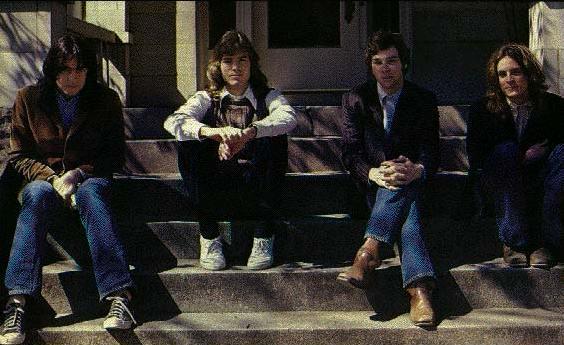
Never fully appreciated during their time, Big Star is the classic story of a band that came along at the exact wrong time and didn’t get the recognition that they so much deserved. The four piece from Memphis, Tennessee were originally named after a nearby grocery store and were fronted by duo Alex Chilton and Chris Bell, who met at the University from the same city. Despite recording three albums, all with critical acclaim, they had bad distribution through their label and as a result saw very poor sales. To put into context just how much they were under appreciated, Bell actually left the band after the first album, ‘#1 Record’, because of the poor reception it received. ‘#1 Record’ is now in Rolling Stone Magazines ‘500 Greatest Albums Of All Time’. Other Albums, ‘Radio City’ and ‘Third/Sister Lovers’ also never made it into the mainstream, which critics have recently claimed was due to the lack of people into Power pop at the time. Only years after they disbanded in 1974 did they start to draw attention to themselves, music lovers began passing the music onto other music lovers, and rapidly the band began to pick up a cult following. This resulted in tribute albums, countless cover versions and even a reunion tour, due to popular demand in 1993, with Jon Auer and Ken Stringfellow of The Posies filling in for Chris Bell who tragically died in a car crash in 1978. Big Star’s story lives on though the book ‘Big Star. The Story of Rock's Forgotten Band’ by Rob Jovanovic, and is being made into a movie that will see a release some time next year. Better late than never.
Power Pop
Power pop first originated in the mid sixties during the rise of English and American pop and rock music. The genre is usually applied to bands that write songs with catchy melodies, pop guitar, strong hooks and infectious harmonies. Songs tend to stay quite simple in structure and there’s an absence of guitar solos and complicated drum beats. Although starting in the ‘60s, it’s the seventies when power pop really took off, and it was common for keyboards and synthesizers to be used. American bands were the first to really take to it, with The Raspberries and Big Star being the pioneers of the sound. In the late ‘70s there was an atlantic divide in the definition of power pop, with the american side tending to tag it to bands that were in the new wave and punk genres. Whilst on the other side in the UK, bands that played punchy, melodic punk rock like The Jam, Elvis Costello and the Attractions and The Buzzcocks were being labled it. During the late ‘80s the genre became less mainstream and although followed religously by enthusiasts, it was difficult to find. Weezer’s 1994 hit ‘The Blue Album’ brought the music back into the public eye, and it’s continued to flourish since sometimes being labled pop punk or pop rock.

No comments:
Post a Comment